


- Start playing the video
- Click CC at bottom right
- Click the gear icon to its right
- Click Subtitles/CC
- Click Auto-translate
- Select language you want
The Connection between Racism and the Origins of Policing
In an effort to deter crime, police often engage in a strategy of highly visible patrolling of low-income communities. More often than not, the beneficiaries of these patrols are communities with high populations of people of colour, such as Regent Park, often leading to allegations of racial profiling and antagonism with local residents. The wave of protests over the killing in police custody of George Floyd are the latest outpourings of anger that have erupted around the world over the policing of Black communities and police relationships with Black people. As we stand witness to yet another killing by the police, it is important to reflect back on the history of policing and to understand why it is so deeply rooted in racism.
Policing was first brought officially to Canada in 1830s by the British and French who at the time were in the process of colonizing Canada. So what role did the police play in the colonization of Canada? Well in order to colonize a place it is necessary to establish either control over, and/or extermination of, the Indigenous people who are there. With the help of the police a system was created that could detain, imprison, and remove Indigenous people all under the guise of enforcing the laws, which were written by the colonizers. This in turn allowed for Canada to be founded as a nation under white European domination.
In the early years of Canada becoming a nation the colonizers had firmly occupied the eastern parts of it, however out west many Indigenous communities had not yet been forced off their land. That was soon to change when in 1873 Prime Minister John A. Macdonald created the North-West Mounted Police (NWMP). Unlike the traditional police the NWMP was much more militarized and in effect acted as both the law makers and the law enforces. During this time the NWMP forced Indigenous people off their land to make way for the Canadian Pacific Railway which was being built at the time so that white settlers could travel west. We can see then that the NWMP was essentially created with a goal, even if it was not explicitly stated, of clearing the land of Indigenous people for the purposes of establishing white communities.
In 1920 the NWMP, and the Dominion Police Force (DPF), which had been set up to protect government operations, were merged to form the Royal Canadian Mounted Police (RCMP). The RCMP has a colourful history of poor treatment of Indigenous people. In recent years many Canadians have been taught about residential schools, which were boarding school for Indigenous kids meant to erase their culture and “help” them integrate with “normal” society. In reality residential schools were places of terrible abuse and violence. However, it is not widely taught the role the RCMP had in the round up and forceful removal of kids from their family and homes to send to these horrific institutions. Once again the police system in Canada was used to promote whiteness and support the erosion of Indigenous people and culture.
The origins of racism in the police isn’t just related to the oppression and murder of Indigenous people either. Around this same time slavery was ending, having been officially abolished in Canada in 1834. However, with the end of slavery came an uneasiness about Black people who would no longer be so directly controlled by wealthy white colonizers. Given this new context colonizers sought out a system that would allow them to continue their control of these newly freed Black people. Enter the system of police that had already shown the ability to dominate and exert control over Indigenous people. Black people at the time were believed to be naturally stupid, lazy, degenerates and many white people believed that without white interference Black people would revert back to their ‘natural’ state and criminality would run rampant. In fact, a lot of white people felt that laws and punishments to control Black people was a way of doing them a favour so they would not unleash their ‘inner demons’.
It’s not surprising then that any expression of freedom or liberation on the part of Black people was seen as suspicious. The government turned to police forces who were used to investigate expressions of Black autonomy and re-establish control under the guise of protecting Black people from themselves and in turn eliminating any criminality that was sure to follow. Although much has changed since the 1800s its easy to see that the same stereotypes of Black people still hold up today. As Robin Maynard points out in her excellent book Policing Black Lives, as recently as the 1980s the Montreal Police used pictures of Black men when conducting their shooting target practice. And closer to home a new 2020 report (A Disparate Impact) by the Ontario Human Rights Commission reveals troubling statistics about anti-Black racism in the Toronto Police. For example, even though African Canadians make up only 8.8% of Toronto’s population they represented almost four in 10 (38%) people involved in cannabis charges, despite conviction rates and many studies showing that they use cannabis at similar rates to White people; even more tragic is that Black Canadians accounted for 25% of police shootings and police sexual assault in the city.
While slavery and colonization have long since ended in Canada it is clear that present day policing continues to echo many of the same historical themes that oppressed Indigenous and Black people back in the day. Police forces continue to play a role in protecting the interests of rich, white Canadians by attempting, often intentionally and perhaps sometimes subconsciously, to control and suppress Indigenous and Black people. There can be no doubt we have a long way to go before we have a fair, just and equal society with a police force that matches those values as well.
By Adaku Huggins-Warner
Adaku is a volunteer journalist with the FOCUS Media Arts Centre
References
https://www.researchgate.net/publication/326383693_Policing_Black_Lives_State_Violence_in_Canada_from_Slavery_to_the_Present_Book_Review
http://www.ohrc.on.ca/en/news_centre/new-ohrc-report-confirms-black-people-disproportionately-arrested-charged-subjected-use-force
https://online.wlu.ca/news/2019/08/13/history-policing-canada
https://globalnews.ca/news/7048298/policing-in-canada-colonialism-anti-black-racism/
Add new comment

FOCUS Media Arts Centre (FOCUS) is a not-for-profit organization that was established in 1990 to counter negative media stereotypes of low income communities and provide relevant information to residents living in the Regent Park area and surrounding communities.
We seek to empower marginalized individuals and under represented communities to have a voice, through the use of professional training, mentorships and participatory based media practices that enable the sharing of stories, experiences and perspectives on relevant matters and issues. In brief our mandate is to empower marginalized individuals and under-serviced communities to have a voice and tell their own stories.
Recent Media
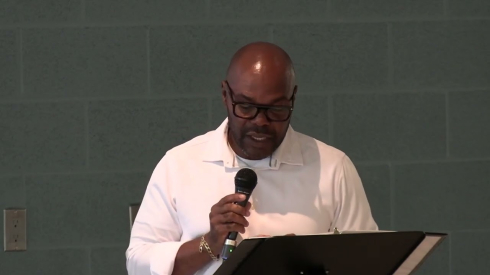
Regent Park Town Hall: Councillor Chris Moise Updates Residents on Key Issues
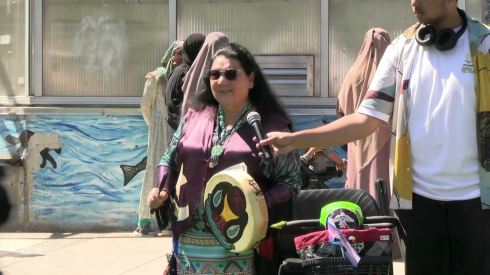
Regent Park Marks 34th Annual Sunday in the Park Celebration
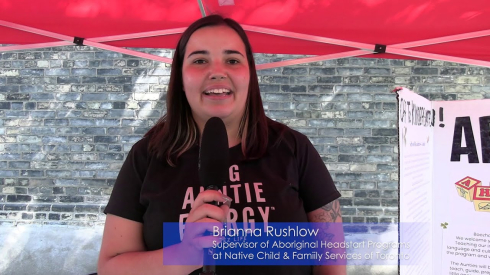
Building Healing Pathways for Families: Inside Native Child’s Work in Toronto





We encourage comments which further the dialogue about the stories we post. Comments will be moderated and posted if they follow these guidelines:
The Community Media Portal reserves the right to reject any comments which do not adhere to these minimum standards.