

- Start playing the video
- Click CC at bottom right
- Click the gear icon to its right
- Click Subtitles/CC
- Click Auto-translate
- Select language you want
Henna: Its History, Significance, and Artists
By Saima Islam
Saima is a youth journalist with the FOCUS Media Arts Centre
Henna (also known as Mehendi) is a paste that is made with a powdered form of the henna plant. The earliest use of henna goes back to around 9,000 years ago in Egypt. It has also been a part of many South Asian and Middle Eastern countries for centuries. Henna has cultural and spiritual uses, but it was also used in these countries due to its natural cooling properties to help regulate body temperature.
Henna is ambiguous in its uses and can be used for cosmetology, medicine, religious purposes, celebration, spirituality, and more! It has been used as a natural hair dye that gives a rich and vibrant orange shade to one's hair. Nowadays in the beauty world, companies like LUSH Cosmetics have begun selling henna as hair dye and people have begun using it to create fake freckles. However, it is mainly used in celebration during special occasions such as weddings and holidays.
Many people of different cultures and ethnicities apply henna and based on the culture, the henna designs can vary! For example, North African henna designs consist of straighter lines and are more geometrical, whereas Indian henna designs contain more swirls and mandalas.
As Regent Park has a large Muslim, South Asian, and African population, many people in the community seek to get their henna done especially around Eid. With the demand soaring near Eid al-Adha just a few weeks ago, many henna artists from Regent Park received loads of inquiries and bookings!
Radhia Ali, one of the many talented henna artists in Regent Park talks a little bit about her experience being a henna artist, what drew her to it, and how it helps her connect with her culture.
“Growing up, I didn't have anyone to go to for henna especially during Eid. It made me realize how convenient it would be if I learned how to do it.
The thing I enjoy most about practicing henna is the fact that my skills have evolved to the point where now I am able to apply henna on others and that I have been able to start a small business with it! This makes me so happy that now there are other girls coming to me and looking up to me.
Doing henna definitely makes me feel more connected to my culture as I started doing and practicing henna for the sake of my culture. Sometimes we forget that every culture has its own sacred set of things that don't collide with other cultures. This is what makes every culture unique in its own way. Doing henna has taught me the deep value of my culture. I think I feel the most connected to my culture when I'm doing henna with the combination of listening to Bollywood music. It reminds me of back home and I absolutely love it!”
Applying decorative henna is a task that requires focus, stability, and creativity. All of the henna artists in Regent Park are immensely talented at what they do.
Add new comment

FOCUS Media Arts Centre (FOCUS) is a not-for-profit organization that was established in 1990 to counter negative media stereotypes of low income communities and provide relevant information to residents living in the Regent Park area and surrounding communities.
We seek to empower marginalized individuals and under represented communities to have a voice, through the use of professional training, mentorships and participatory based media practices that enable the sharing of stories, experiences and perspectives on relevant matters and issues. In brief our mandate is to empower marginalized individuals and under-serviced communities to have a voice and tell their own stories.
Recent Media
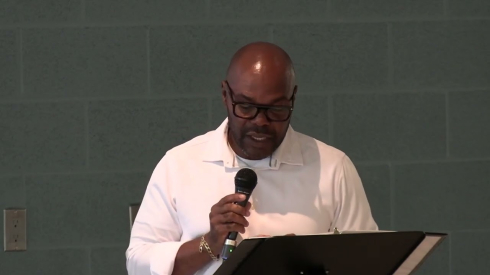
Regent Park Town Hall: Councillor Chris Moise Updates Residents on Key Issues
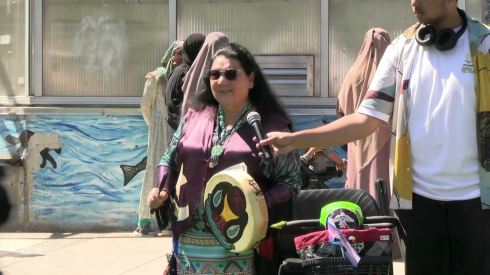
Regent Park Marks 34th Annual Sunday in the Park Celebration
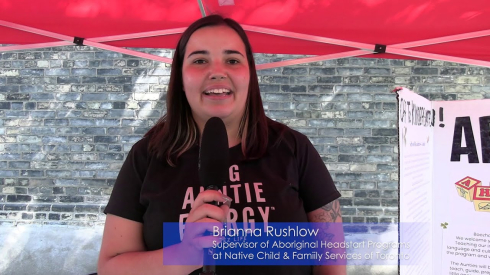
Building Healing Pathways for Families: Inside Native Child’s Work in Toronto
We encourage comments which further the dialogue about the stories we post. Comments will be moderated and posted if they follow these guidelines:
The Community Media Portal reserves the right to reject any comments which do not adhere to these minimum standards.