


- Start playing the video
- Click CC at bottom right
- Click the gear icon to its right
- Click Subtitles/CC
- Click Auto-translate
- Select language you want
A Quiet Revolution in Aging: Finding Meaning Through Stillness
In a culture where speed is often mistaken for progress, a quiet Canadian production is making the case for stillness, not as an indulgence, but as a radical act of resistance, reflection, and renewal.
In the third episode of the CHCO-TV series Pathways to Stillness, gerontologist and Tai Chi instructor Dr. Gary Irwin-Kenyon joins journalist Vicki Hogarth to explore what it means to age meaningfully in a society still tethered to the myth of eternal youth. But this isn’t a conversation about health hacks or retirement strategies. It’s about slowing down enough to truly listen to ourselves, to one another, and to the passage of time.
“In our culture, aging is often something to fear or fight,” says Dr. Irwin-Kenyon. “But there’s another way. There’s power in stillness—a chance to recognize that our lives are stories still unfolding.”
That reframing is both personal and political. The episode forms part of a broader civic conversation about how societies value—or undervalue—their older citizens. In an era defined by digital distraction and constant change, the idea that aging can be a time of spiritual depth and creative engagement challenges long-held assumptions baked into policy, city planning, and even family life.
Throughout the episode, viewers share reflections that are as varied as they are poignant. One participant, Theresa, speaks of entering a timeless state while painting or writing. Another, Maggie, has redesigned her mornings to be tech-free, slowly sipping coffee while resisting the pull of her phone. These small, deliberate choices reflect a yearning for more human-paced rhythms—an ethos of attention over acceleration.
Dr. Irwin-Kenyon introduces the idea of being “out of time”—not in the sense of urgency, but in the experience of stepping beyond the clock’s grip. “My daughter discovered that time stops when she listens—really listens—to someone else’s story,” he shares.
This, he argues, is where civic transformation begins: with the cultivation of empathy and presence. When people pause to witness the depth in another’s story, a fractured social fabric can begin to mend.
One viewer, Donna, describes her practice of intentional listening: “I make eye contact, pause before responding, and ask thoughtful questions. It deepens the moment.” It’s a skill we rarely teach, but one with far-reaching implications—for healthcare, for end-of-life conversations, and for how we design services and cities for an aging population.
Stillness, in this framework, is not passivity. It’s generative—a space for healing, connection, and meaning. Nature plays a role too. “Sit quietly in a forest or by the ocean,” says Dr. Irwin-Kenyon. “Eventually, the trees and flowers begin to speak to you.” Another viewer shares that walking without headphones has become a deeply restorative practice.
While much of public discourse around aging focuses on logistics—housing, care, pensions—Pathways to Stillness asks a more profound question: What would change if we saw elderhood not as diminishment, but as a civic asset?
“There’s outer aging—by the clock,” Dr. Irwin-Kenyon says. “But inner aging is something else. It’s the wisdom we accrue. The stillness we come to. It’s about how we grow inwardly even as the body changes.”
The series doesn’t offer prescriptions, but an invitation—to resist the cult of busyness, reclaim presence, and rethink what it means to grow older in community. In doing so, it gently shifts the narrative from individual decline to collective potential.
Because if there’s a political lesson in the practice of stillness, it’s this: a society that listens to its elders, that makes space for reflection and depth, is a society better prepared to face its future—quietly, and together.
Add new comment

Charlotte County television is New Brunswick's only source for independent community television. Since 1993, CHCO-TV has been providing Southwest New Brunswick with locally-produced content made by community it serves.
The mission of CHCO-TV is to promote community media and to encourage, educate and engage residents in Southwestern New Brunswick, to use new media and technology, to improve civic involvement, learn new media skills and enhance the culture, the economy, health and quality of life in New Brunswick.
Recent Media
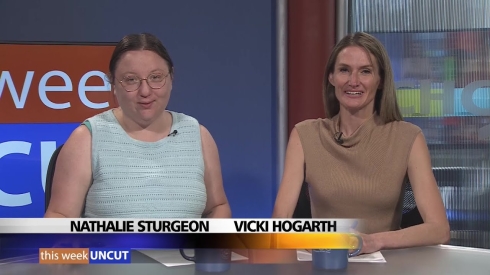
This Week Uncut on CHCO-TV: September 15-21, 2025

From Illness to Action: A Family’s Story Sparks a Community Movement

St. Andrews Artist Ted Michener Turns Cancer Journey into Humour-Filled Book for Patients





We encourage comments which further the dialogue about the stories we post. Comments will be moderated and posted if they follow these guidelines:
The Community Media Portal reserves the right to reject any comments which do not adhere to these minimum standards.