

- Start playing the video
- Click CC at bottom right
- Click the gear icon to its right
- Click Subtitles/CC
- Click Auto-translate
- Select language you want
Regent Park Does The Monster Mash
By Dimitrije Martinovic
Dimitrije is a staff member at FOCUS MEDIA ARTS CENTRE
Regent Park in Toronto’s downtown east side is known for many things; however, it is the lingering and often misleading stereotype of being “one of the poorest neighbourhoods,” that shapes most people’s perspective of this area. Despite this misperceived backdrop of despair, the area has always maintained an unshakeable sense of community with generations of families calling the area home. Demographically the area has changed substantially, from a predominantly working class and low-income Irish composition during the early 1900s, to a multi-cultural and multi-ethnic make-up brought on by changes in Canadian Immigration policies from the 1960s and 1970s.
Today the make-up in Regent Park (based on ethnicity) consists of the following: Aboriginal 1.52%, Black13.64%, Recent Immigrant 6.06%, White 13.64%, South Asian 19.70%, African 45.45%, Southeast Asian 12.12%, Hispanic 3.03%, West Indian 1.52%, and Arab 3.03%. These figure help to distinguish shifts in the cultural landscape that suggest long-standing Euro-centric traditions, like Halloween, are almost destined to experience a certain amount of bifurcation or hybridity if they are to continue. And it is precisely at this point that cultural traditions become all the more interesting.
“The Monster Mash” a song by Bobby Pickett and the Crypt-Kickers, at first glance sits firmly entrenched in the Anglo-European tradition of Halloween, but does that bare out under closer scrutiny? Written in the early 1960s, in a period in American musical history that was heavily influenced the black musical traditions of “gospel, jump blues, boogie, rhythm and blue, and country music” (Christ-Janer, Albert, Charles W. Hughes, and Carleton Sprague Smith, American Hymns Old and New (New York: Columbia University Press, 1980), p. 364, ISBN 0-231-03458-X). The Monster Mash, in fact, owes as much to the musical styles of Dee Dee Sharp and other performers such James Brown, Carlton“King”Coleman, and Billy Thorpe and the Aztecs, all whom recorded some version of the Mashed Potato (a song very similar in structure to The Monster Mash). And so, from the beginning, The Monster Mash, is a product of hybridity. One trend interacting with another, creating an offspring that is the mix of both.
Therefore, embracing The Monster Mash dance and the traditions of Halloween, becomes for newcomers an avenue for integration – the term Mash itself refers to a mix, or a melange – an appropriate metaphor for the mix of cultures and traditions that underpins all celebrations, be they religious, political, or secular.
Integration and inclusion are at the heart of what the Friends of Regent Park, a community-based organisation made-up of people that work together to support green space, cultural, and recreational activities in Regent Park is all about. And this year, as the coronavirus pandemic disrupts our social fabric, the Friends of Regent Park organized a virtual Halloween celebration. A mash-up of old and new, they mixed, pumpkin carving video tutorials, with pumpkin recipes that incorporate Asian flavours, and last of all that icon of the Halloween tradition, The Monster Mash Dance, presented by three members of Square Circle (a Regent Park non-profit) dedicated to engaging, educating and empowering youth through the use of Social Circus and creative arts.
In a short video, Jacob, Zahra, and Bayle, breakdown and breakout the unique dance moves (The Frankenstein, The Mash, The Crank, The Wolf, and The Rip) that make the song so mesmerizingly appealing. While Jacob and Zahra perform standing up, Bayle offers a version of the movements sitting down, demonstrating, how someone with mobility issues need not feel excluded.
The Monster Mash, a cultural mash-up, a cultural breakdown, a cultural icon of inclusivity.
Add new comment

FOCUS Media Arts Centre (FOCUS) is a not-for-profit organization that was established in 1990 to counter negative media stereotypes of low income communities and provide relevant information to residents living in the Regent Park area and surrounding communities.
We seek to empower marginalized individuals and under represented communities to have a voice, through the use of professional training, mentorships and participatory based media practices that enable the sharing of stories, experiences and perspectives on relevant matters and issues. In brief our mandate is to empower marginalized individuals and under-serviced communities to have a voice and tell their own stories.
Recent Media
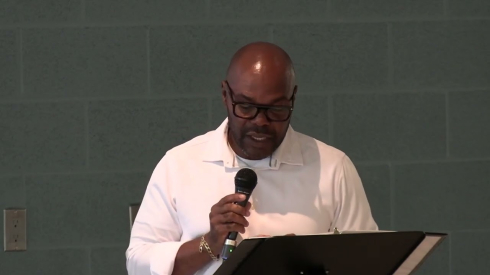
Regent Park Town Hall: Councillor Chris Moise Updates Residents on Key Issues
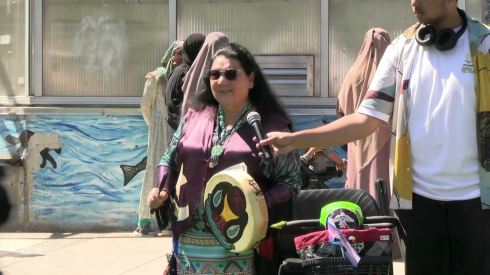
Regent Park Marks 34th Annual Sunday in the Park Celebration
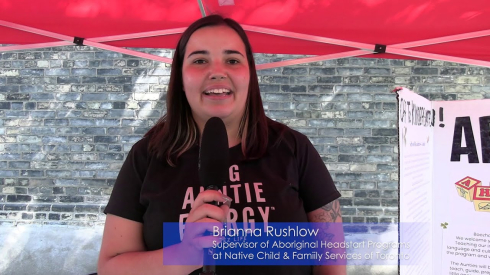
Building Healing Pathways for Families: Inside Native Child’s Work in Toronto
We encourage comments which further the dialogue about the stories we post. Comments will be moderated and posted if they follow these guidelines:
The Community Media Portal reserves the right to reject any comments which do not adhere to these minimum standards.