

- Start playing the video
- Click CC at bottom right
- Click the gear icon to its right
- Click Subtitles/CC
- Click Auto-translate
- Select language you want
Abortion Misinformation "Has Been Allowed to Flourish" in New Brunswick
Misinformation About Abortion Persists Despite Policy Changes in New Brunswick
A University of New Brunswick researcher says harmful misinformation about abortion continues to spread, even as the provincial government works to reduce barriers to this essential health care service.
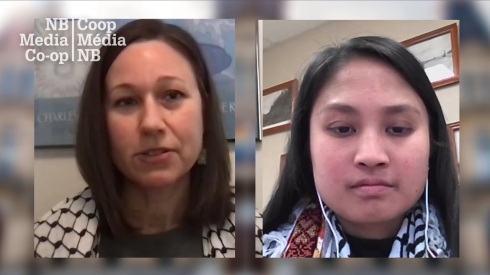
Sociologist Tobin LeBlanc Haley—who also serves on the board of directors for the NB Media Co-op—recently presented research she co-authored with Christine Hughes as part of the Feminist Lunch Series at UNB Fredericton on Friday, Feb. 7.
To help combat misinformation, LeBlanc Haley recorded a version of her talk, which the NB Media Co-op is sharing as part of Sexual Health Week. The broader research included 28 interviews and three focus groups, with a total of 43 unique participants.
The Impact of Misinformation
"A lack of clear knowledge about where, how, and what it means to have an abortion can frustrate patient decision-making and create unnecessary stress and anxiety," LeBlanc Haley said.
She and her co-author found that misinformation about abortion has been allowed to flourish in New Brunswick. This includes myths surrounding the moral character of abortion patients, health risks, access pathways, and the motivations of clinic-based providers.
For example, some study participants spoke about the widespread assumption that abortion patients are irresponsible or deviant. While this was not a dominant theme, its presence was still "deeply and profoundly troubling," LeBlanc Haley noted.
One of the most concerning findings was that some participants believed there was no abortion access in the province at all—a misconception that reflects the lack of clear, publicly available information.
Limited Access to Procedural Abortion
While abortion services do exist in New Brunswick, access remains restricted. Currently, three hospitals provide procedural abortions—two in Moncton and one in Bathurst. Meanwhile, medication abortions are available with the abortion pill, Mifegymiso.
The province made a significant policy shift following the October election of Liberal Premier Susan Holt, who moved quickly to repeal Regulation 84-20. This regulation had made New Brunswick unique in Canada by restricting Medicare-funded procedural abortions to hospital settings, preventing freestanding clinics from offering the service.
Despite this progress, the closure of Clinic 554 in Fredericton last year due to financial pressures has left a gap in abortion care. The clinic was the only freestanding facility offering procedural abortions in the city and had provided free services to those unable to afford the fee.
The Rise of Dangerous Conspiracy Theories
LeBlanc Haley also addressed the spread of far-right conspiracy theories related to abortion, including the "great replacement theory." This white supremacist narrative falsely claims that abortions are part of a plot to reduce the white population in countries like Canada and the United States.
"This theory has resurged, especially in the wake of the overturn of Roe v. Wade and amidst the very troubling rise of fascism that we are all currently witnessing and living through," she said.
Supporting Informed Conversations
The research underscores the urgent need for better public education and access to accurate information about abortion in New Brunswick. As the province moves forward with policy changes, combating misinformation remains a critical part of ensuring safe and equitable reproductive healthcare for all.
Add new comment

Recent Media
Connecting Gaza: New Brunswickers are Among a Network Supporting Families Amid Genocide

Canadian News Media Complicit In Israeli Genocide cover-up, Says Veteran Journalist

Delays on Herbicide Restrictions Show Province Aims to Protect Industry, says Green MLA

We encourage comments which further the dialogue about the stories we post. Comments will be moderated and posted if they follow these guidelines:
The Community Media Portal reserves the right to reject any comments which do not adhere to these minimum standards.