


- Mettre en route la vidéo
- Cliquer sur l’icône « CC » (Sous-titre) en bas à droite
- Cliquer sur l’icône « Settings » (Paramètre) en bas à droite
- Cliquer sur «Subtitles » (Sous-titres)
- Cliquer sur « Auto-translate » (Traduire automatiquement)
- Sélectionner la langue de votre choix
Community Television in Vancouver - Past, Present and Future.
Cathy Cena, the Host of Tri-Cities 'Community TV Magazine' show interviewed Geoff Scott the Executive Director of Tri-Cities Community TV. Mr. Scott talked about how valuable community television is to communities all around Canada as it provides local, commercial free television in the local community, covering content often not covered by the large media outets. It is done with limited funding and requires partnering with various community groups.
Scott says community TV today is a very pale comparison to what Community TV used to be. In the past - the seventies and eighties - the cable companies at the time were required to provide Community TV. According to Scott, the one cable company in town, which made money from subscriptions, was required to provide coverage of City Council meetings and what was called Community TV.
The unfortunate thing, says Scott, is that Community TV was never really clearly defined in legislation so what that really meant was unclear. What Rogers wound up doing was opening up Community TV offices so in the Lower Mainland - there were over a dozen offices where people could walk in, learn about TV production. "If you wanted to host, if you wanted to shoot, if you wanted to edit, they would teach you the basics. It wasn't a production school but they would teach you the basics and in return you could hone your craft and at the same time produce programming that was a value to the community," says Scott.
Says Scott, I grew up in Kitsilano and there was an office that just served people from Kits to East Van., as an example.The programming was primarily about things happening in Kits. The East Van office for example was very politically motivated in the 80s, so their programming more about local controversies such as: How SkyTrain was dividing our community and other issues, rather than whether than just promoting what was happening with Community groups and other other groups as we did in Tri-Cities. Here progammin was very sports oriented. They had all sorts of coverage of Junior Hockey. Every Community had their own interests and people in the community drove the content that would then be aired on Rogers. Those with a long memory remember Channel Four as the community Channel.
The first big change occurred when Shaw took over from Rogers in the late 80s early 90s and they shut down all the community offices very systematically. The first office to shut down was the office in the Tri-Cities region that was in Port Coquitlam on Kingsway. They told all the volunteers. 'Don't worry, you can come to Burnaby and volunteer there where we have a studio and facilities'. Of course volunteers were mostly unwilling to travel from the Tri-Cities to Burnaby and produce programming.
Scott went on to say that eventually Shaw shut down Richmond, Surrey and Burnaby and centralized into the downtown core and eventually told the volunteers they weren't even needed anymore: That Shaw knew what the community wanted and they could produce community programming better. Shaw ran pretty much three programs over and over and over again on a cycle. The show 'Urban Rush' was one of them. It was well produced but this daytime TV program was pretty much indistinguishable from daytime TV on a commercial channel, promoting through their programming, the restaurant industry the beauty and fashion industries, those kind of things that have very little to do with what was happening in individual communities. It got even worse in 2017 when Shaw essentially just shut down the community Channel. They essentially said to the CRTC that nobody's watching, so they killed it, and anymore because they've pretty muc and they were allowed to shut it down."
And for the future? Is Community TV dead? Scott says that he is working with a Canadian-wide association called CACTUS (Canadian Association of Community TV Users and Stations. The Canadian government recognizes the importance of community TV and the group is working to have community TV better defined and for a general fund be created to help support Community TV. Now individual stations run on a shoe string with a bit of help from Heritage Canada, local organizations and in some cases, Telus.
He feels optimistic that community TV will rise again. Ironically, community TV started in Canada years ago, and it is flourishing in places throughout the world. He says that the main problem in Canada was the cable corporations were put in charge of community TV. With large for-profit organizations running small non-profit organizations, there was a basic conflict of interest. In Australia, for example, the programs of non-profit community TV organizations are put on cable companies and it works well. The cable companies don't have any power over the small organizations. They are flourishing.
His last word: "Community TV is not dead." He predicts that sometime in the future there will be offices across the Lower Mainland with studio and perhaps even mobile trucks.
Comment
Ajouter un commentaire

Tri-Cities Community Television est un organisme à but non lucratif situé à Coquitlam, Port Coquitlam et Port Moody, en Colombie-Britannique. Tri-Cities offre une formation en techniques de production médiatique et permet aux voix de la communauté de se faire entendre.
Médias récents
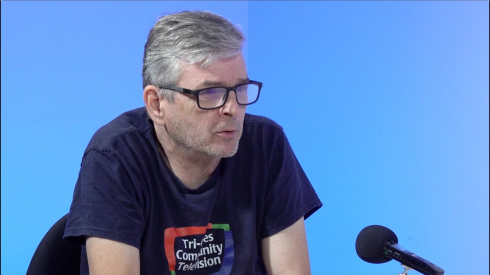
Keeping the Community in Community TV
Face to Face with Councillor Nancy McCurrah: Practical Leadership for a Growing Port Coquitlam
Coquitlam Mayor, Richard Stewart, Shares His Thoughts on Housing, Infrastructure and Homelessness


Commentaires
Nous encourageons les commentaires qui favorisent le dialogue sur les histoires que nous publions. Les commentaires seront modérés et publiés s'ils respectent ces lignes directrices:
Le portail des médias communautaires se réserve le droit de rejeter tout commentaire ne respectant pas ces normes minimales.