

- Mettre en route la vidéo
- Cliquer sur l’icône « CC » (Sous-titre) en bas à droite
- Cliquer sur l’icône « Settings » (Paramètre) en bas à droite
- Cliquer sur «Subtitles » (Sous-titres)
- Cliquer sur « Auto-translate » (Traduire automatiquement)
- Sélectionner la langue de votre choix
"Scenes from the Nanaimo Indian Hospital": Rewriting the colonial script
As a residential school and Indian hospital survivor, Laura Cranmer wrote the play "Scenes from the Nanaimo Indian Hospital" based on her three years at the hospital as a child. Life on Gabriola TV's Althea Rasendriya interviews Cranmer and others, actors and production crew members to learn more about how revisiting this dark past has affected them all, and the play's place in an ongoing language reclamation project.
A brief history: The Nanaimo Indian Hospital operated from the 1940s until the 1960s. it was a former military hospital with 220 beds -- the second largest in western Canada. The hospitals were intended to isolate Indigenous tuberculosis patients from the general public. Although oral drug treatments to cure the disease were later introduced, the Indian hospitals continued their experimental treatments on patients and it was made a crime for an Indigenous person to leave a hospital before being discharged.
"Scenes from the Nanaimo Indian Hospital" features three little girls, representing the three Indigenous language families of Vancouver Island, as they grow their friendship and share memories in each of their own tongues. In the interview, the creators discuss the production process, their background and involvement, healing, revisiting and unveiling this supressed history, what it means to "rewrite the colonial script," and the crucial significance of language reclamation.
Highlights:
[🌐] The play features three girls representing diverse Indigenous languages on Vancouver Island. The importance of preserving these languages.
[🎭] Choice of theatre for storytelling. Aiming to reach a wider audience and make history come alive.
[🤝] How cast and crew's diverse backgrounds contribute to the project.
[🔍] Addressing trauma triggers, sensitivity, and personal connections to historical events.
[🔄] Reclaiming cultural identity through art.
[🌈] Healing journey: Personal reflections on rediscovering cultural pride, overcoming shame, and the therapeutic aspects of the project.
[📚] Using art as a tool for language reawakening, storytelling, and teaching future generations.
Life on Gabriola TV is generously sponsored by:
The Gabriola Arts Council
The Haven, Gabriola Island
Ajouter un commentaire

Based on Gabriola Island, one of the Gulf Islands in the Salish Sea of BC, Life on Gabriola TV provides programming for Gabriolans, by Gabriolans. We cover events and issues in our own community, including adjacent islands, and in the Salish Sea region generally.
Médias récents

No Quick Cure for Health Care on Gabriola Island

Gabriola is the setting of a new award winning Canadian feature film, Seagrass, made on Gabriola Island.
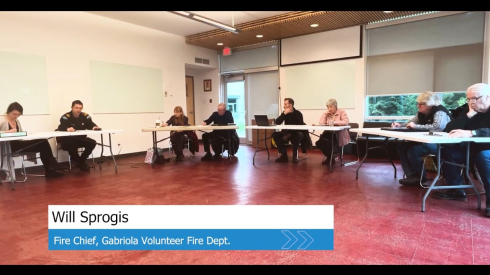
Public Input, EV Chargers and a Resignation: The March 6, 2024 meeting of the Gabriola Fire Protection Improvement District Trustees

Commentaires
Nous encourageons les commentaires qui favorisent le dialogue sur les histoires que nous publions. Les commentaires seront modérés et publiés s'ils respectent ces lignes directrices:
Le portail des médias communautaires se réserve le droit de rejeter tout commentaire ne respectant pas ces normes minimales.