

- Mettre en route la vidéo
- Cliquer sur l’icône « CC » (Sous-titre) en bas à droite
- Cliquer sur l’icône « Settings » (Paramètre) en bas à droite
- Cliquer sur «Subtitles » (Sous-titres)
- Cliquer sur « Auto-translate » (Traduire automatiquement)
- Sélectionner la langue de votre choix
THE BASIC INCOME: a conversation with HUGH SEGAL
In a mixed-income neighbourhood like Regent Park, basic income could have a hugely positive impact. Regent Park possesses a unique mix of subsidized housing and market properties, meaning a sizeable class disparity between residents. Basic income would eliminate the bureaucratic difficulty and the stigma of applying for welfare. The increased income would not only stimulate the local economy, but would further integration between people of different socioeconomic classes. The more connected a community is, it’s more likely to thrive and find strength.
Former Senator Hugh Segal has supported the idea of basic income (a guaranteed minimum salary for all citizens) since the beginning of his career. Through hard work, determination, and a willingness to work across party lines, Segal rose above his own economic obstacles to help create a social program pilot that if implemented will support and benefit all Canadians. Low-income communities especially benefit from basic income, where it can help close the wealth gap. COVID-19 has put millions of Canadians out of work, and a basic income similar to CERB could revitalize our economy and society. Similar pilot projects have found huge success, and now Hugh Segal explains why this is the time to bring basic income to Ontario.
From a young age, former Senator Hugh Segal has known struggle. Born into a low-income family, his parents worked minimum wage jobs to make ends meet. At age 12, Prime Minister Diefenbaker spoke at his school, referring to Canada as a “family table” where all people were welcome: newcomers, refugees, senior citizens, and people of classes. It was a moment he’d “never forget”, and that ethos guided his career in government and public service.
In spite of the hardships he has faced--or more likely because of them--Segal has made it his mission to support basic income: a set minimum income that’s guaranteed to every Ontarian. Currently if you are underemployed and making less than the basic taxable income amount, you would receive a payment from the government when filing your taxes. For those of us that are unemployed, Hugh Segal believes our current welfare program is not working. According to Segal, to apply for unemployment benefits and welfare, you must go through the red tape of proving you are poor, unemployed, and looking for work; any money you make while receiving benefits is paid back to the government. Rather than try to lift low-income people out of poverty, Segal believes it merely keeps them at the same level. Studies have shown a direct correlation between poverty and crime, health, substance abuse, education, and more. Segal argues that by investing in a basic income for Ontarians and making active efforts to reduce poverty, the government ends up saving money.
Segal points to similar projects, both in Canada and worldwide, that have seen success. In the 1970s, the Guaranteed Annual Income Supplement gave Ontarians over 65 an automatic top-up if their income fell below a certain line. This initiative reduced the poverty rate among seniors from 35% to only 3%. In Dauphin, Manitoba, a basic income pilot project created a ripple effect. Segal believes that without having to worry about employment, teens could finish high school and young mothers could take care of their children. More recently, governments in Spain, Scotland, and California have introduced plans to implement basic income. The data shows that when basic income projects are implemented, they yield significant results.
By Chloё Nguyen-Drury
Chloe is a staff member of the FOCUS Media Arts Centre
Ajouter un commentaire

Focus Media Arts (anciennement Regent Park Focus) est un organisme à but non lucratif qui a été créé en 1990 pour contrer les stéréotypes négatifs sur la communauté de Regent Park et fournir des interventions aux jeunes à haut risque vivant dans la région.
Nous sommes motivés par la conviction que les pratiques médiatiques participatives peuvent jouer un rôle vital pour répondre aux besoins locaux et aux priorités de développement, ainsi que pour soutenir le travail de construction et de maintien de communautés saines.
Aujourd'hui, le centre des arts médiatiques FOCUS sert de centre d'apprentissage communautaire pour les nouveaux médias, les arts numériques et la radiodiffusion et la télévision. Nous fournissons un établissement communautaire dédié à la formation et au mentorat des jeunes et à l'engagement des membres de la communauté de tous âges.
Médias récents
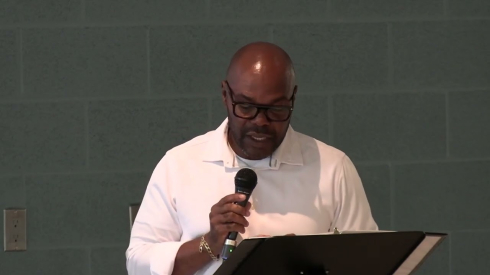
Regent Park Town Hall: Councillor Chris Moise Updates Residents on Key Issues
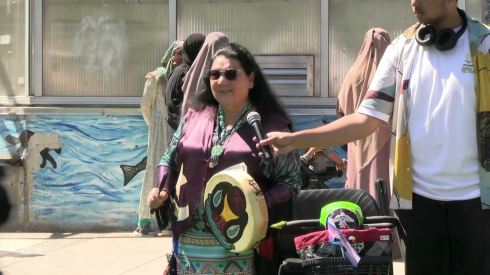
Regent Park Marks 34th Annual Sunday in the Park Celebration
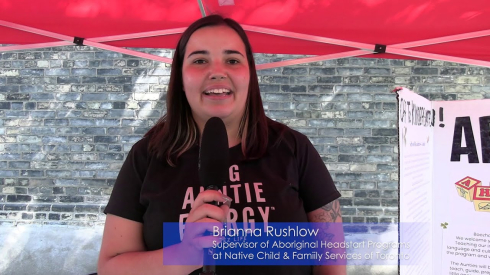
Building Healing Pathways for Families: Inside Native Child’s Work in Toronto
Commentaires
Nous encourageons les commentaires qui favorisent le dialogue sur les histoires que nous publions. Les commentaires seront modérés et publiés s'ils respectent ces lignes directrices:
Le portail des médias communautaires se réserve le droit de rejeter tout commentaire ne respectant pas ces normes minimales.