

- Mettre en route la vidéo
- Cliquer sur l’icône « CC » (Sous-titre) en bas à droite
- Cliquer sur l’icône « Settings » (Paramètre) en bas à droite
- Cliquer sur «Subtitles » (Sous-titres)
- Cliquer sur « Auto-translate » (Traduire automatiquement)
- Sélectionner la langue de votre choix
Barrie Public Library CEO Jessop Emphasizes Community, Inclusivity, Commitment to Quality Service
As Barrie continues to grow, its public library system is grappling with increasing demand, limited resources, and a need for expansion. Despite a booming population of over 150,000 residents, the city only has three public libraries—far below what is considered adequate for a city of its size. This situation contrasts sharply with nearby Innisfil, which, despite having just a third of Barrie's population, boasts the same number of libraries.
During an interview on July 25, 2024, Barrie Public Library CEO Lauren Jessop highlighted the long history and importance of the library in the community. "The library has been in Barrie for a long time, since the late 1800s as a Mechanics Institute, how a lot of public libraries started," Jessop said. “We've been in this (downtown) building since 1996 and we opened the Painswick library in 2012. And then we opened our location in the Holly neighbourhood in 2022.” The library currently serves around 35,000 to 40,000 active members, nearly one-third of the city's population, with the number fluctuating as people move in and out of the city.
Jessop elaborated on the library’s expansion plans, which include a master facilities plan that suggests the city will need six library branches by 2030. She explained that the Holly Library was established as part of a broader plan to expand coverage to more areas of the city. This plan also included the addition of an outreach van to help staff bring library services to various locations, such as parks and recreation centers. Furthermore, kiosks have been set up at East Bayfield and Allandale to enhance access to library services in those areas.
“We're trying to extend our service without necessarily needing the full expense of a branch. Not to say we wouldn't love them, but we understand that, you know, fiscal restraints.”
A recent City Council motion has further complicated these efforts. Passed without prior notice, the motion requires the library to seek Council approval for any capital reserve spending. This has put a hold on plans to refresh the children’s floor at the downtown library, a project Jessop had been preparing to propose to the library board this fall. “I'm disappointed that we couldn't have had a further conversation about it,” Jessop commented on the motion. “Since the motion, I have had more discussions with the mayor and with Councillor Nigussie (Ward 7), around that motion and around the library reserve, so I feel confident that we'll come up with a solution.”
The issue of late fees also came up during one of the council meetings. Jessop explained that the library eliminated late fees in 2020, a move designed to remove barriers to access for low-income families. She said it wasn’t a significant source of revenue, and the decision has allowed more people to continue using the library without fear of accruing fines they can’t pay.
Gary Harvey, Ward 7 Councillor, raised concerns during the June 19 City Council meeting bout what he perceived as excessive spending by the library, specifically pointing to the purchase of a high-end equipment for the Holly Library staff room. He suggested that the equipment was more luxurious than necessary. In response, Jessop clarified that the fridge was selected due to the limited space in the staff room and the supply chain challenges faced during the pandemic. She emphasized that the library chose the less expensive option and only paid for one fridge, despite ordering two to ensure availability. Jessop also noted that the fridge, like other equipment purchased for the library, is designed for commercial use, which requires durability and can be more costly than typical household items.
During the same meeting, Harvey also questioned the cost of shelves installed at the Painswick and Holly branches, suggesting that the spending was excessive. Jessop addressed this by explaining that the shelves were part of a broader effort to improve accessibility and visibility of library materials, particularly for children. She highlighted that the shelves, like other library furniture, are designed for commercial use, meaning they are built to withstand heavy public use and last for many years. This durability and functionality come at a higher cost than standard household shelving, but they are essential for meeting the needs of a busy public library.
Jessop’s vision for the future includes making library services more accessible and convenient for all Barrie residents. However, the challenges of limited resources and the need for Council approval on capital projects may slow progress.
“The ultimate goal, is making it (library) accessible to everyone in the community, within the means that we have, right?,” she said. “We obviously have to be mindful of our budget and of our staff capacity, but as best we can do to offer that within our means, that's what we'll do.”
Ajouter un commentaire

Simcoe Community Media is a non-profit media organization based in Barrie, Ontario, specializing in civic journalism. Our mission is to foster an informed, connected, and vibrant community by amplifying diverse voices and perspectives, promoting transparency, and encouraging public discourse.
Médias récents

Tony Belcourt Brings Artists Together for Reconciliation Through Art

Truth, Land, Reconciliation: Barrie Walks as Annexation Debate Sparks Local Oro-Medonte Opposition
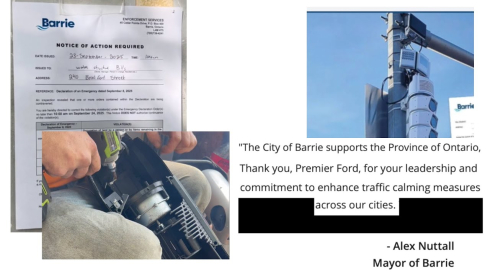
Barrie's Two Crises: Crackdown on Encampments Continues as City Ends Speed Enforcement Program
Commentaires
Nous encourageons les commentaires qui favorisent le dialogue sur les histoires que nous publions. Les commentaires seront modérés et publiés s'ils respectent ces lignes directrices:
Le portail des médias communautaires se réserve le droit de rejeter tout commentaire ne respectant pas ces normes minimales.