The worst of the COVID-19 pandemic is behind us, and journalists and researchers are now tasked with understanding the lessons of this traumatic collective experience.
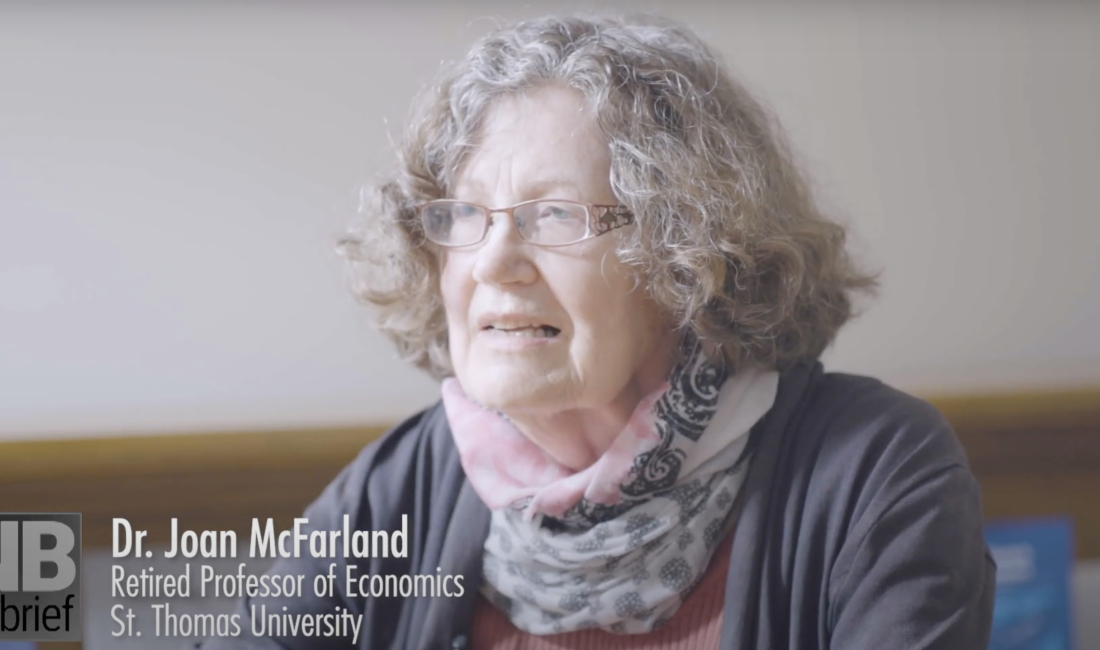
During the last quarter, the NB Media Co-op produced a half-hour talk show — part of our NB debrief series — that examined a disturbing aspect of Canadian society thrust into the spotlight by the pandemic: the crisis in long-term care.
One researcher who shared her expertise with us has linked more than 22,000 COVID-19 deaths to residential care facilities in Canada.
Subject matter experts who appeared on this edition of the show — interviewed by NB Media Co-op volunteers and LJI-funded staff — included a labour organizer, an economics professor, a journalist and a public health care advocate.
They described how systemic problems within the long-term care sector have resulted in poor living conditions for residents and, by the same token, inadequate pay and poor working conditions for those tasked with caring for those seniors.
As a reporter who frequently monitors community forums on social media platfiorms, it seems clear to me that, during the throes of the pandemic, a highly vocal segment of the population grew callous to the plight of seniors.
It is my hope that information in this episode of our show will help people to better understand the structural conditions that make elderly people vulnerable, especially those with low incomes, showing that such tragic outcomes aren’t inevitable.
How can we measure the impact of the show? As outlined in the NB Media Co-op’s latest quarterly report for CACTUS, page views for this episode reached 1,400, according to Google Analytics. Of that number, about 10 per cent viewed the actual episode on YouTube.
While these figures are modest, they don’t account for viewership on community television via our broadcasting partner, CHCO-TV. Content on this station is delivered to viewers via cable and satellite across much of the province, and via over-the-air free broadcasts in Charlotte County, New Brunswick.
This episode went live on May 1st. More recently, I have begun work that involves on-the-ground video reportage for the NB Media Co-op. My first report as part of this new project involved coverage of a climate justice demonstration in Moncton. Since posting this report online less than two weeks ago, it has already been viewed more than 350 times on YouTube.
This signals that our video reportage is becoming more widespread in its reach, a positive development for the NB Media Co-op, which was largely focussed on written journalism before we began working with the Local Journalism Initiative last year.
Ajouter un commentaire
A propos l’IJL
LJI Impact is the section of commediaportal.ca where the journalists and their organizations participating in CACTUS' Local Journalism Initiative can share their greatest successes.
Through the written stories, photos and videos you see in the LJI Impact section, you'll be able to read first hand accounts about how the presence of a community journalist is making a difference in communities across Canada through the Local Journalism Initiative and the Community Media Portal.
The Community Media Portal is a gateway to the audio-visual media created by community media centres across Canada. These include traditional community TV and radio stations, as well as online and new media production centres.
Community media are not-for-profit production hubs owned and operated by the communities they serve, established both to provide local content and reflection for their communities, as well as media training and access for ordinary citizens to the latest tools of media production, whether traditional TV and radio, social and online media, virtual reality, augmented reality or video games.
The Community Media Portal has been funded by the Local Journalism Initiative (the LJI) of the Department of Canadian Heritage, and administered by the Canadian Association of Community Television Users and Stations (CACTUS) in association with the Fédération des télévisions communautaires autonomes du Québec (the Fédération). Under the LJI, over 100 journalists have been placed in underserved communities and asked to produce civic content that underpins Canadian democratic life.


