


- Mettre en route la vidéo
- Cliquer sur l’icône « CC » (Sous-titre) en bas à droite
- Cliquer sur l’icône « Settings » (Paramètre) en bas à droite
- Cliquer sur «Subtitles » (Sous-titres)
- Cliquer sur « Auto-translate » (Traduire automatiquement)
- Sélectionner la langue de votre choix
This Week Uncut on CHCO-TV: April 28-May 4, 2025
Federal Shifts and Local Voices Collide in Southwest New Brunswick
The latest episode of This Week Uncut on CHCO-TV explored a week marked by intensified civic engagement across Southwest New Brunswick, where national election results collided with grassroots issues—from Campobello Island’s ferry service to infrastructure gaps in rural fire halls.
The federal election on Monday night delivered a historically tight outcome, with both the Liberals and Conservatives surpassing 40% of the national vote—a rare feat not seen since 1930. Reporting from the heart of Charlotte County, CHCO-TV and The Courier journalists Vicki Hogarth and Nathalie Sturgeon framed the results as a reflection of voter fatigue and shifting political alliances.
“A historic election that we saw on Monday night at every angle,” said Sturgeon, pointing out how the region echoed a broader national realignment.
Hogarth emphasized the potential upside of a minority government, suggesting it could encourage cooperation over division. “I think Canadians are realizing that we're better when we work together,” she said, viewing the narrow outcome not as a stalemate but a mandate for collaboration.
Island Access and Infrastructure Disconnects
Local issues took center stage as well. On Campobello Island, residents welcomed the early launch of the seasonal ferry, operated by the New Brunswick Department of Transportation. For years, locals have been forced to travel through the United States to reach the mainland. A department spokesperson said the ferry’s return was driven by need, not politics: “The need was there, and we wanted to fill that need.”
Though limited in schedule and capacity, the ferry was seen as a lifeline—and a symbol of the broader fight for equitable infrastructure in remote Bay of Fundy communities.
Further inland, Rollingdam’s volunteer fire department made headlines after receiving a new fire truck that was too large for its building. The issue drew swift attention from government officials, and the fire chief praised the rapid response. “This means a lot to the firefighters and to the community itself,” he said, while also highlighting the disconnect between centralized procurement policies and rural realities.
Election Reflections in Charlotte County
The episode also tracked the performances of local federal candidates. Conservative MP John Williamson retained his seat following a competitive campaign, while former Liberal MP Karen Ludwig made a strong but unsuccessful bid to return to Ottawa.
“She did put in a good fight,” Hogarth remarked, pointing to the high voter turnout and local engagement as evidence of a politically active population.
Williamson echoed a sentiment running throughout the episode—that progress in this political moment will require partnership over partisanship. “I’m prepared to go there and do the things that I need to do to work across party lines,” he said in his post-election comments.
National Ripples, Local Realities
As the episode wrapped, one theme stood out: the federal outcome may have been close, but its effects on rural life are profound. From emergency services to basic transportation, Southwest New Brunswick remains a vivid example of how national politics intersect with daily life.
The message was unmistakable: civic engagement isn’t just alive in communities often considered peripheral—it’s essential.
Ajouter un commentaire

La télévision du comté de Charlotte est la seule source de télévision communautaire indépendante du Nouveau-Brunswick. Depuis 1993, CHCO-TV fournit au sud-ouest du Nouveau-Brunswick du contenu produit localement par la communauté qu'elle dessert.
La mission de CHCO-TV est de promouvoir les médias communautaires et d'encourager, d'éduquer et d'engager les résidents du sud-ouest du Nouveau-Brunswick, d'utiliser les nouveaux médias et la technologie, d'améliorer la participation civique, d'acquérir de nouvelles compétences médiatiques et d'améliorer la culture, l'économie, la santé et qualité de vie au Nouveau-Brunswick.
Médias récents

From Illness to Action: A Family’s Story Sparks a Community Movement
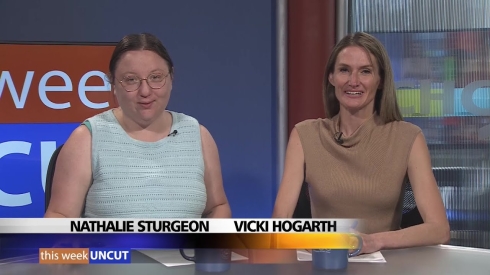
This Week Uncut on CHCO-TV: September 15-21, 2025
St. Andrews Council Votes Against Going Ahead With Wharf Refurbishment





Commentaires
Nous encourageons les commentaires qui favorisent le dialogue sur les histoires que nous publions. Les commentaires seront modérés et publiés s'ils respectent ces lignes directrices:
Le portail des médias communautaires se réserve le droit de rejeter tout commentaire ne respectant pas ces normes minimales.