While Bécancour is the core of the development of the battery sector in Quebec, Vallée-du-Richelieu is not far behind.
Andréane Viau – Local Journalism Initiative
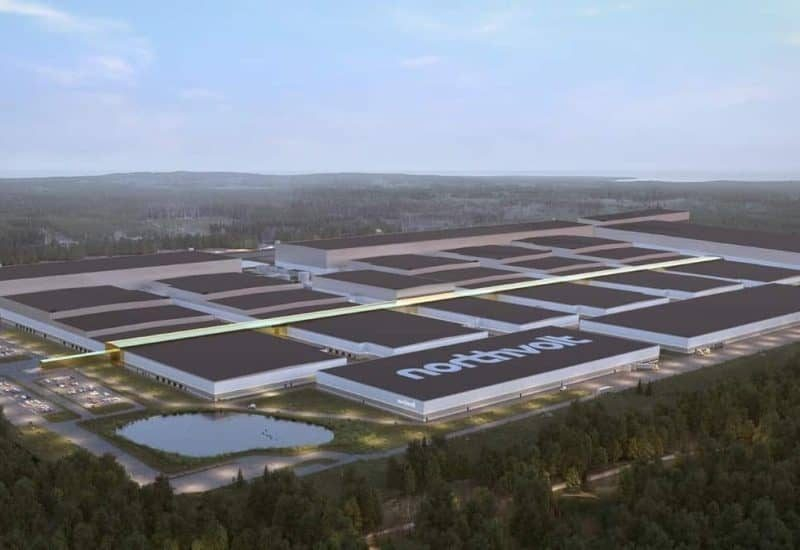
With the arrival of the Swedish company Northvolt on land that straddles the towns of McMasterville and Saint-Basile-le-Grand, people are talking about the Valley more than ever. And although Northvolt is currently generating a lot of attention, it is only the beginning of this new industrial activity in the region. Several other companies have chosen Montérégie as their home, including Dana-TM4, Exprolink, Lithion and Volta Energy Solutions.
TVR9 has thus become an essential media outlet for reporting the facts on the battery industry, mainly because of our extensive coverage of Northvolt. Our team worked to meet with mayors, citizens, businesses and organizations to provide a complete picture of the progress of this project and its impacts on the region.
TVR9 coverage
Our privileged access and our objective position in this matter allowed us to observe different dynamics and contribute to finding solutions. First of all, at the beginning of the year, several citizens and groups, including the Citizen Action Committee: Northvolt project, informed us that they had very few answers to their questions. The cancellation of the two information sessions planned for November 2023 by the Quebec government has put more than a few minds off. Thus, since the fall, no new information has been communicated to citizens, who were watching the Northvolt project progress at high speed.
Faced with this dismay, we requested an interview with the Swedish company, just to dot a few “i’s”. Northvolt responded quickly and favorably to our request. Thus, we welcomed Mr. Laurent Therrien, director of communications and public affairs at Northvolt to our studios. Mr. Therrien was generous with his time and his responses. This interview demonstrated great openness on the part of the company towards the concerns of the population. The director, who admitted to being aware of the lack of adequate communication channels, explained the various initiatives that Northvolt intended to put in place to alleviate the situation.
Thus, after this interview, new information was made public and was shared with the Citizen Action Committee, whose Facebook group was full of questions and misinformation. In discussing with municipal elected officials and even with Northvolt, the consensus was that we cannot blame citizens for hiding behind alarmist information, bordering on conspiracy, because it was the only information available at that time, in the face of silence. of the government of Quebec.
Communication, a priority issue
Yes, the municipalities were negotiating with the Ministry of the Environment to obtain permits to move the file forward, but beyond these interactions, both Saint-Basile-le-Grand and McMasterville remained unanswered despite the influx of questions from citizens. . Faced with discontent, the government finally decided to postpone the two information sessions that had been canceled in the fall.
We must credit and thank the town of Saint-Basile-le-Grand which, after its discussions with the Ministry of the Environment, strongly suggested that it dialogue with the local media, including TVR9, to find out more. make the announcement. That's when we received the call from Minister Benoit Charette's press secretary to do an interview.
If there is one party among all the actors that make up the Northvolt “project” that was in hot water, it was the Ministry of the Environment. Without having the exact statistics, we can affirm that 90% of the questions and concerns of citizens of Vallée-du-Richelieu relate to the impact of the battery industry and, in turn, of Northvolt on the environment.
We therefore had the opportunity to speak with the Minister of the Environment who, despite his "ready-made" politician's answers, was able to enlighten us on several issues denounced, including the BAPE. Thus, although unsatisfactory for those requesting the BAPE, this interview made it possible to put into context the decisions taken by the Quebec government before the arrival of Northvolt on the map and to explain why the company is not subject to this process. Among the interviews and reports we have done in the last three months, this one has obtained the highest number of views on our channel.
We were able to capture the two information sessions organized by the Quebec government, during which representatives of each ministry involved were present. The citizens, mainly from McMasterville and Saint-Basile-le-Grand, were there, although on their heels. The tension was palpable. We could feel the overflow created by the government's silence in recent months. People wanted answers and they were not going to give the representatives any room for error. Ultimately, questions about the future of the project remained mostly unanswered. Although Northvolt has a long-term vision, the government is only involved in one phase at a time. Thus, for all questions relating to water and the Richelieu River which concern phase 3 of the Northvolt project, the representatives cannot comment, because they have no data at hand on which to base themselves. Yes, they can plan what happens next, but the details are yet to come.
The population will therefore have to face the facts: the uncertainty they are currently experiencing will most likely continue for several more years. And TVR9 will be there to, once again, highlight the new information available in this file and allow as many people as possible to become informed.
Add new comment
About LJI
LJI Impact is the section of commediaportal.ca where the journalists and their organizations participating in CACTUS' Local Journalism Initiative can share their greatest successes.
Through the written stories, photos and videos you see in the LJI Impact section, you'll be able to read first hand accounts about how the presence of a community journalist is making a difference in communities across Canada through the Local Journalism Initiative and the Community Media Portal.
The Community Media Portal is a gateway to the audio-visual media created by community media centres across Canada. These include traditional community TV and radio stations, as well as online and new media production centres.
Community media are not-for-profit production hubs owned and operated by the communities they serve, established both to provide local content and reflection for their communities, as well as media training and access for ordinary citizens to the latest tools of media production, whether traditional TV and radio, social and online media, virtual reality, augmented reality or video games.
The Community Media Portal has been funded by the Local Journalism Initiative (the LJI) of the Department of Canadian Heritage, and administered by the Canadian Association of Community Television Users and Stations (CACTUS) in association with the Fédération des télévisions communautaires autonomes du Québec (the Fédération). Under the LJI, over 100 journalists have been placed in underserved communities and asked to produce civic content that underpins Canadian democratic life.