
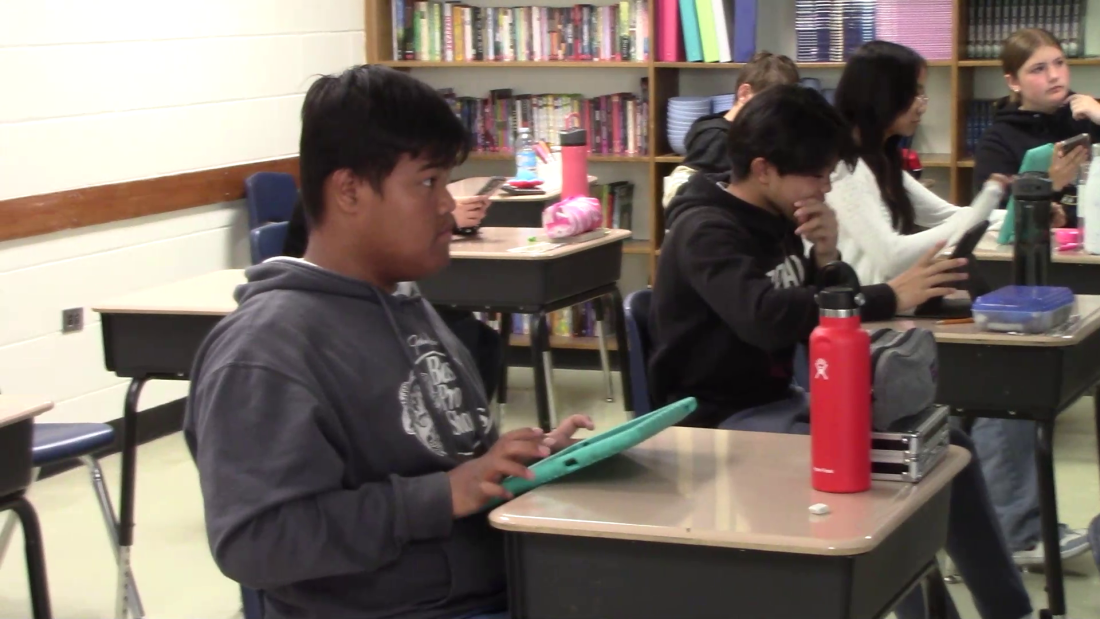
If one thing has changed most in classrooms over the past decade or so, it’s the use of new technologies by students and educators. In its three-part series on technology in the classroom, NACTV shed light on the many ways technology has changed the way students are being educated, some of which were not at all what people might have been expecting. While many technologies were covered, including smartboards, drones, and even classroom lighting, it was personal devices that turned out to be in the hot seat.
With recent Manitoba legislation banning the use of cellphones in the classroom, NACTV coverage showed how those devices actually aid in the delivery of classroom services.
Thanks to building a relationship with the Beautiful Plains School Division over the past year, NACTV was invited right into the classroom to speak not just with teachers but also with students about issues with technology. Students and teachers at Neepawa Middle School demonstrated how - prior to the ban - cell phones and other personal devices were actually used to engage with the lessons through interactive software, such as participating in quizzes and collaborative projects. Because most school divisions do not have the budget to provide electronic devices to every student, the ban is leaving them without this important tool for classroom engagement.
Distraction in the classroom is certainly an issue worth engaging with, and NACTV coverage was able to show the other side of an important story.
Add new comment
About LJI
LJI Impact is the section of commediaportal.ca where the journalists and their organizations participating in CACTUS' Local Journalism Initiative can share their greatest successes.
Through the written stories, photos and videos you see in the LJI Impact section, you'll be able to read first hand accounts about how the presence of a community journalist is making a difference in communities across Canada through the Local Journalism Initiative and the Community Media Portal.
The Community Media Portal is a gateway to the audio-visual media created by community media centres across Canada. These include traditional community TV and radio stations, as well as online and new media production centres.
Community media are not-for-profit production hubs owned and operated by the communities they serve, established both to provide local content and reflection for their communities, as well as media training and access for ordinary citizens to the latest tools of media production, whether traditional TV and radio, social and online media, virtual reality, augmented reality or video games.
The Community Media Portal has been funded by the Local Journalism Initiative (the LJI) of the Department of Canadian Heritage, and administered by the Canadian Association of Community Television Users and Stations (CACTUS) in association with the Fédération des télévisions communautaires autonomes du Québec (the Fédération). Under the LJI, over 100 journalists have been placed in underserved communities and asked to produce civic content that underpins Canadian democratic life.


